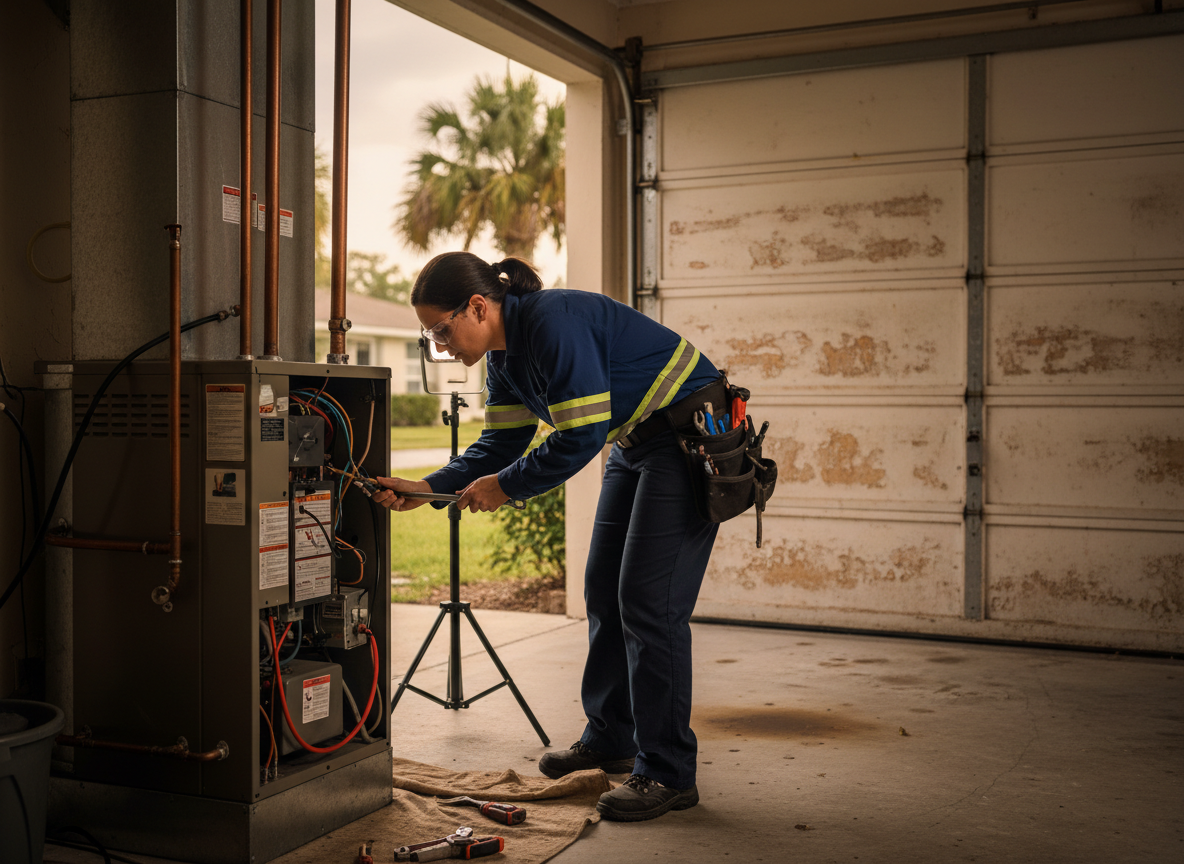
Tampa Bay homes in neighborhoods like Hyde Park, Ybor City and Davis Islands often date to the 1920s through 1960s, with original ductwork and furnaces that see little use outside rare winter cold fronts. When temperatures drop, these systems can fail from seized blowers, cracked heat exchangers or corroded connections that formed during months of high humidity. Technicians at Restexa Labs inspect for rust on metal components and check gas lines for leaks before any repair begins.
Electric heat strips in air handlers common in St. Petersburg and Clearwater properties frequently develop broken elements or faulty sequencers after sitting idle. Salt air from the bay accelerates corrosion on outdoor units, while pollen and dust buildup inside return ducts reduces airflow and strains the heating section. Repairs here require verifying proper amperage draw and confirming the thermostat calls correctly for heat rather than assuming a simple part swap will restore operation.
During a cold snap, homeowners in South Tampa sometimes discover their system short-cycles because the limit switch has tripped from restricted airflow caused by years of accumulated debris. Restexa Labs techs clear the condensate drains and test safety switches before leaving, because a single overlooked sensor can shut the unit down again once temperatures fall. Upfront inspection prevents callbacks on these older systems.
Code requirements in Hillsborough and Pinellas counties mandate proper venting and combustion air for any gas furnace work. Technicians verify that exhaust pipes remain clear of nesting debris common near the waterfront and confirm the unit meets current efficiency standards when parts are replaced.
Technician insight
In Tampa Bay area, the thing that catches most people out with heating repair is how high humidity during the long off-season corrodes the heat exchanger and limit switches in older homes around Ybor City and Hyde Park, so the unit fails the first time a cold front arrives and the homeowner has no heat.
Cold Front Failure in South Tampa Bungalow
A 1950s bungalow in South Tampa lost heat during a rare winter cold front. Inspection showed a corroded limit switch and clogged return duct restricting airflow. The switch was replaced and the duct cleared. The system ran reliably through the remainder of the cold spell.
How it works
- 1
Initial Assessment
Arrive at the Tampa Bay property and review the heating system's age, recent performance and any error codes shown on the thermostat or control board.
- 2
Component Testing
Check igniter, flame sensor, blower motor, limit switches and heat exchanger for cracks or corrosion typical after long idle periods in humid conditions.
- 3
Diagnosis and Quote
Explain the exact fault found, provide an upfront quote and outline parts needed before any repair work starts.
- 4
Repair and Verification
Replace or clean the faulty component, restore power and run the system through multiple cycles to confirm safe, consistent heat output.
- 5
Final Walkthrough
Show the homeowner the repaired area, explain any ongoing maintenance needs for the local climate and leave contact details for 24/7 follow-up.
Pricing
Upfront quotes provided after inspection, before any parts are ordered or work begins.