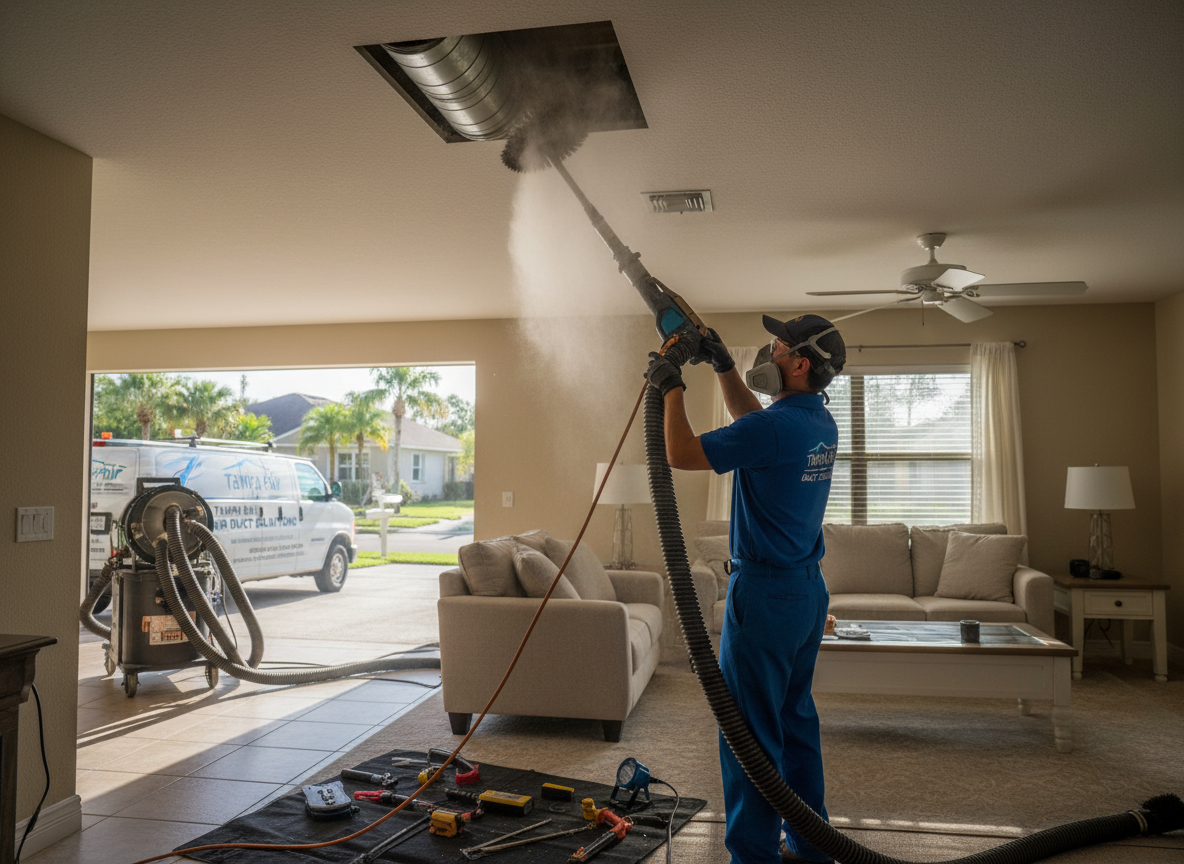
Tampa Bay's subtropical climate brings persistent humidity and frequent summer storms that push moisture into duct systems. In neighborhoods such as Seminole Heights and Hyde Park, many homes built before 1980 still carry original sheet-metal ducts that were never sealed at the joints. Over time those seams collect dust, pollen, and condensation, creating conditions where mold colonies form along the interior walls of the trunk lines. Cleaning crews must use negative-pressure equipment rated for high-moisture environments and inspect every accessible boot and plenum before beginning agitation.
Access points in these older homes are often limited. Attics in South Tampa bungalows are low and poorly ventilated, while many 1960s ranch homes in Carrollwood have ducts routed through crawl spaces that sit only eighteen inches off the ground. Technicians therefore carry compact rotary brushes and flexible video scopes to reach trunk lines without dismantling finished ceilings. After the cleaning pass, each register is removed and the interior surfaces wiped to remove the fine silt that otherwise re-enters the living space within days of the service.
Post-storm calls increase every hurricane season when wind-driven rain forces water past poorly flashed roof penetrations and into supply ducts. In these cases the work order expands to include moisture mapping with infrared cameras and targeted drying before any brushing begins. Homeowners are advised to keep the system off until the ducts test dry; running the blower on wet metal simply redistributes spores throughout the house.
Technician insight
In Tampa Bay area, the thing that catches most people out with air duct cleaning is how quickly high indoor humidity turns a simple dust job into a mold remediation call in pre-1980 homes around Seminole Heights where the original ducts were never sealed.
Post-Storm Duct Moisture in South Tampa
A homeowner in South Tampa noticed musty odors after two days of heavy rain. Inspection found standing water inside a low attic trunk line that had entered through a lifted roof flashing. Crew isolated the wet section, dried it with dehumidifiers, then completed the full negative-pressure cleaning. Airflow improved and the odor did not return.
How it works
- 1
Initial Assessment
Technician arrives at the Tampa address, reviews access to the air handler, and uses a borescope to document interior condition of the main trunk and branch lines.
- 2
Negative-Pressure Setup
HEPA-filtered vacuum is connected to the system and the house is placed under slight negative pressure to contain loosened debris during agitation.
- 3
Mechanical Cleaning
Rotary brushes and compressed-air whips are run through each accessible duct run while the vacuum pulls material to the collection point outside the residence.
- 4
Register and Boot Service
Every supply and return register is removed, cleaned, and reinstalled; visible boot interiors are wiped before the system is returned to normal operation.
Pricing
Pricing varies with the number of accessible runs, attic or crawl-space conditions, and any moisture remediation required after storms.