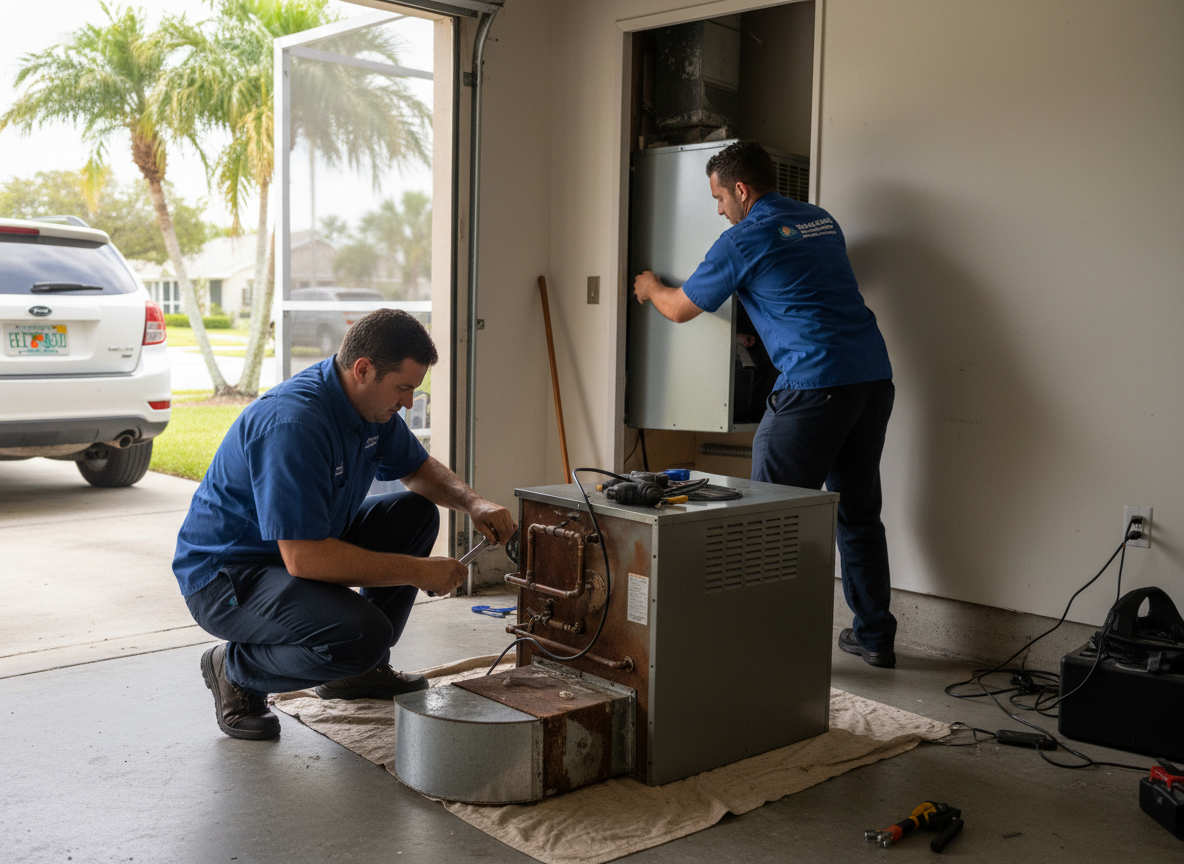
In Tampa Bay area homes built before 1990, particularly in South Tampa and Ybor City neighborhoods, furnaces often sit unused for most of the year until a rare cold front arrives. This infrequent operation lets coastal humidity corrode heat exchangers and burners inside the cabinet, especially when units share space with air handlers in tight utility closets. Replacement requires checking for rusted flue connections that can leak combustion gases into living spaces once the system finally runs under load.
Hillsborough County permitting rules for gas furnace swaps in older single-family homes demand verification that the existing vent stack meets current clearance standards from nearby windows. Many pre-1980 builds in Seminole Heights still use single-wall pipe that must be upgraded to B-vent during replacement. Technicians also inspect the concrete slab or crawlspace for moisture intrusion that accelerates rust on the new unit's base if not isolated with proper vibration pads.
Pinellas County coastal properties face additional salt-air exposure that shortens the life of outdoor furnace components when paired with heat pump systems. Replacement jobs here often involve resizing the unit because original equipment was oversized for the area's light heating loads, leading to short cycling and higher humidity inside the home. Proper matching to existing ductwork prevents pressure imbalances that pull moist air from bathrooms and kitchens.
Restexa Labs starts every furnace replacement by confirming the home's insulation levels and window orientation, since Tampa Bay's sun load affects how much supplemental heat is truly needed. This prevents oversizing that wastes energy during the few weeks of actual demand each winter.
Technician insight
In Tampa Bay area, the thing that catches most people out with furnace replacement is humidity rusting the heat exchanger in units that only run a few days a year in pre-1980 homes around Hyde Park and Davis Islands.
Corroded Furnace in Seminole Heights
Homeowner in Seminole Heights called after inconsistent heat during a cold snap. Inspection showed rusted heat exchanger and single-wall venting from the 1970s build. Replaced the furnace, upgraded to B-vent, and sealed connections. System now runs safely with even airflow.
How it works
- 1
Initial System Assessment
Technician inspects the existing furnace, ductwork, and venting for corrosion and code compliance in the specific Tampa Bay home.
- 2
Removal of Old Unit
Disconnect gas, electrical, and flue connections, then safely extract the old furnace while protecting surrounding flooring and walls.
- 3
New Furnace Installation
Position and secure the replacement unit, update venting if required, and connect to existing ductwork with proper sealing.
- 4
Testing and Commissioning
Verify gas pressure, combustion, airflow, and thermostat operation before leaving the site.
Pricing
Upfront quotes based on home inspection; cost varies with unit size, venting updates, and duct conditions common in older Tampa Bay homes.