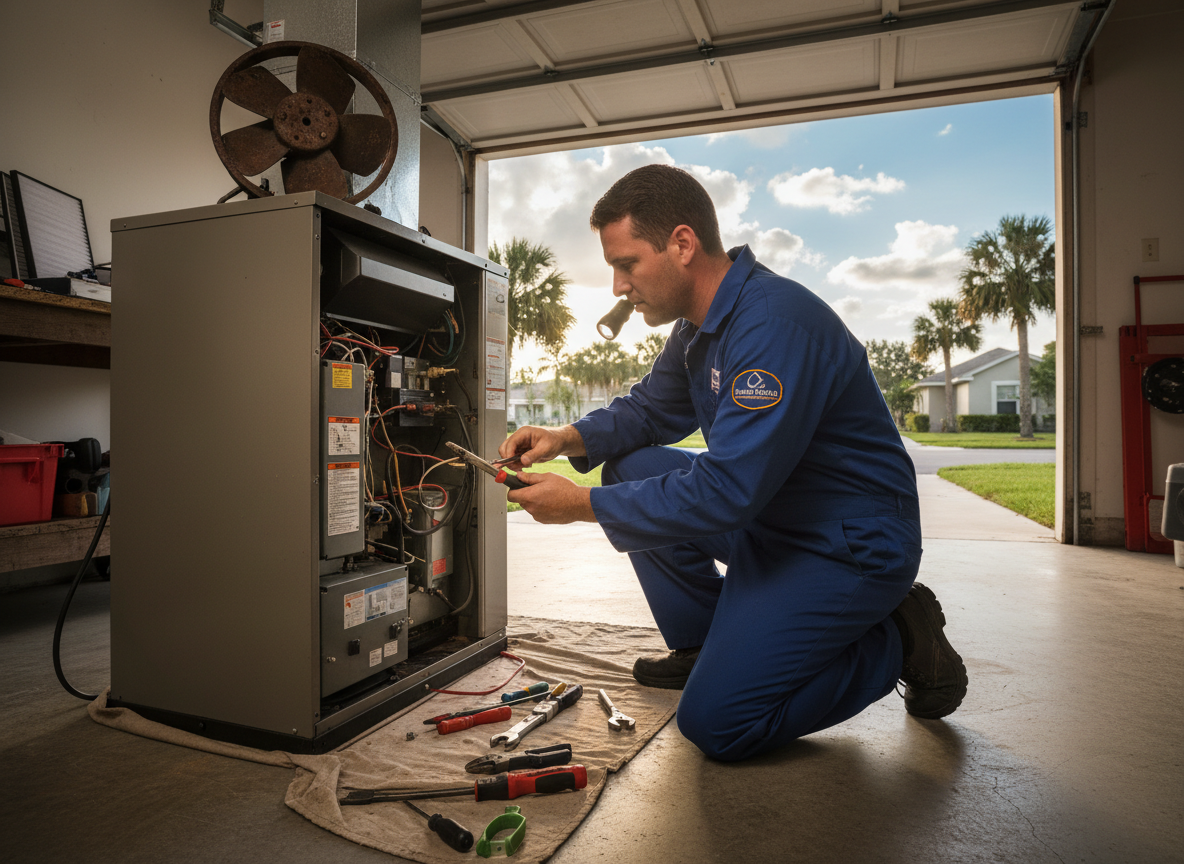
Tampa Bay homes built before 1980 often feature older gas furnaces or heat pump hybrids tucked in attics or garages where salt air and constant humidity accelerate rust on heat exchangers and burners. When a rare winter front drops temperatures into the 30s, these units that sat idle for months can fail to ignite because moisture has corroded the flame sensor or clogged the condensate drain. Technicians here routinely check for standing water in the secondary heat exchanger and test for carbon monoxide leaks that become more likely after long periods of non-use.
Edge cases in this climate include oversized units installed for occasional use that short-cycle and crack heat exchangers, plus the interaction between high dew points and metal components that creates hidden corrosion inside the flue. Local codes require proper venting clearances in older Tampa neighborhoods where roof lines and additions have altered original exhaust paths. Ignoring these details during repair can lead to repeated lockouts or unsafe operation once temperatures rebound.
Proper furnace repair here starts with verifying gas pressure against manufacturer specs while accounting for the lower demand loads typical in Florida. Technicians also inspect the condensate pump and drain lines that can back up from pollen and mold common in the area, which in turn trips safety switches. Homeowners in South Tampa and Carrollwood frequently discover issues only after the first cold night, so scheduling a pre-season check prevents emergency calls when fronts arrive.
Seasonal Considerations
Furnace systems in Tampa Bay experience the most stress during the brief transition periods when overnight lows dip but daytime humidity remains high, causing rapid condensation inside cabinets that were designed for drier northern climates.
Technician insight
In Tampa Bay area, the thing that catches most people out with furnace repair is humidity-driven corrosion inside units that only run a few nights a year, especially in pre-1970 homes around Seminole Heights where attic installations trap moisture and shorten component life.
Cold front call in Hyde Park
A homeowner in an older Hyde Park bungalow reported no heat during an unexpected cold snap. Inspection revealed a corroded flame sensor and clogged condensate line from months of idle time in humid conditions. We cleaned the sensor, cleared the drain, and restored ignition. The system operated safely through the brief cold period.
How it works
- 1
Initial Assessment
Arrive on site and confirm the model, age, and current symptoms while checking for visible corrosion or water intrusion common in Tampa Bay attics.
- 2
Component Testing
Test flame sensor, igniter, gas valve, and safety switches, noting any humidity-related buildup that affects rarely used equipment.
- 3
Targeted Repair
Clean or replace affected parts, clear drains, and verify venting meets local requirements for the specific neighborhood housing style.
- 4
System Verification
Run the furnace through multiple cycles, check for carbon monoxide, and confirm safe operation before leaving the property.
Pricing
Upfront quotes provided after inspection; pricing varies by unit age, parts needed, and access conditions in older Tampa homes.