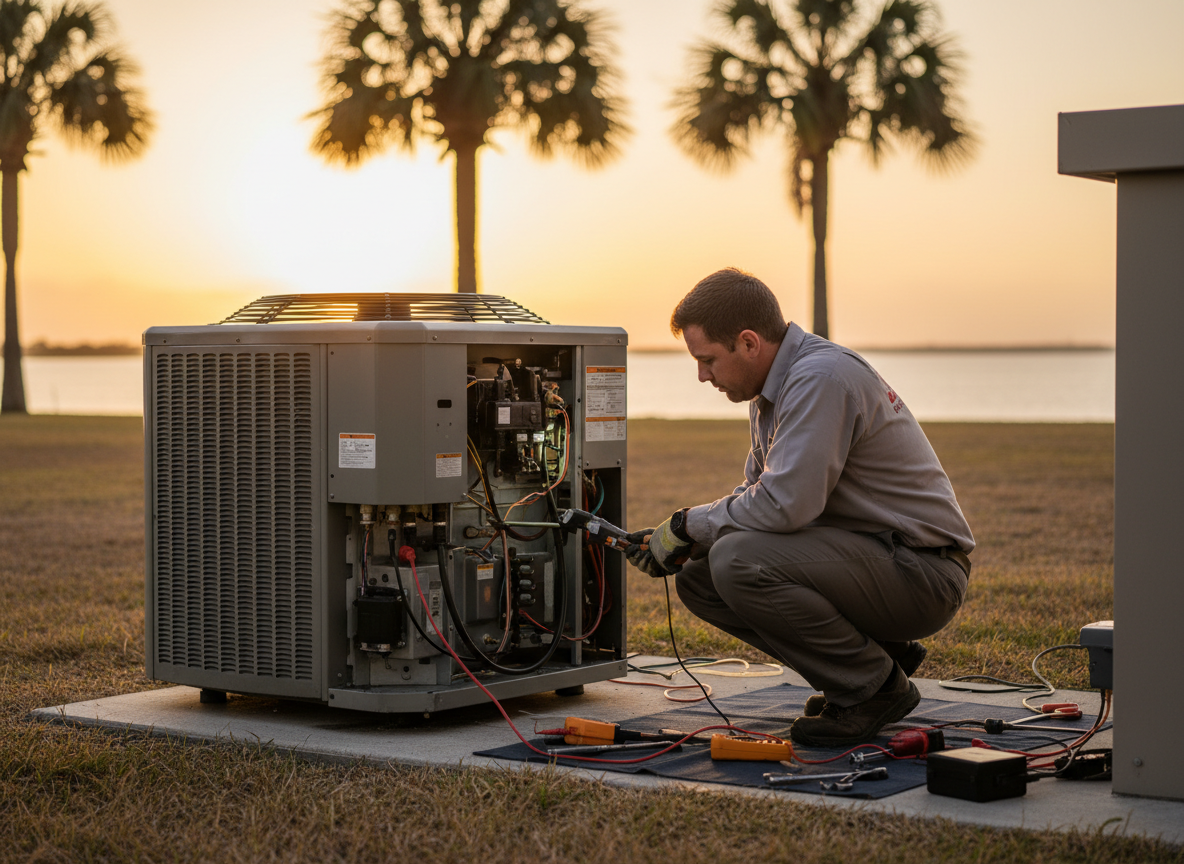
Tampa Bay summers push systems hard with sustained high humidity and frequent afternoon storms that can knock out power or flood condensate lines. Emergency calls often involve compressors that seize after running nonstop or capacitors that fail from voltage spikes during lightning. Technicians dispatched from the Franklin Street base carry common parts for Carrier, Trane, and Rheem units that dominate local installs in older bungalows and 1970s ranch homes across Seminole Heights and Ybor City.
Many Tampa properties still use R-22 systems or early R-410A units installed before updated energy codes tightened duct sealing requirements. A failed blower motor in these homes quickly leads to indoor humidity above 60 percent, risking drywall damage and mold in poorly ventilated attics common in Hyde Park and Davis Islands. Techs check both the outdoor unit and return-air pathways because restricted airflow from pollen buildup or collapsed flex duct accelerates most summer failures.
Storm season adds another layer: high winds can shift rooftop units or debris can clog drains, causing water to back up into the air handler. After a hurricane watch, calls spike for systems that shorted from power surges or lost charge through vibration-loosened flare fittings. Response prioritizes safe shutoff first, then targeted repair to restore cooling before indoor temperatures climb past 85 degrees in sealed Florida homes.
Code compliance matters on any refrigerant work. Tampa requires proper recovery and leak checks before recharging; skipping this step risks fines and repeat failures when moisture enters the system. Homeowners in flood-prone zones near the Hillsborough River are advised to locate air handlers above grade where possible to avoid future water damage during heavy rains.
Technician insight
In Tampa Bay area, the thing that catches most people out with emergency HVAC repair is how fast indoor humidity climbs once the unit stops during a summer storm. Older homes in Seminole Heights and Ybor City often have undersized returns or collapsed flex duct that turns a simple capacitor failure into a mold risk within hours. Checking the entire airflow path, not just the outdoor unit, is what separates a one-visit fix from callbacks after the next rain.
Storm-Related Compressor Failure in Tampa
A home in Davis Islands lost cooling during an afternoon thunderstorm. The outdoor unit had shorted from a power surge and the condensate line was clogged with debris. We replaced the contactor and capacitor, cleared the drain, and restored operation before indoor humidity reached damaging levels.
How it works
- 1
Call 24/7 Dispatch
Describe the symptoms and address in Tampa or nearby neighborhoods so the nearest tech can be routed from the Franklin Street location.
- 2
On-Site Diagnosis
Technician inspects the full system, checks electrical components, airflow, and refrigerant levels while explaining findings before any repair begins.
- 3
Repair or Replace Decision
Upfront quote covers parts and labor needed to restore operation; options are discussed if the unit is at end of life.
- 4
Completion and Test
System is repaired, tested under load, and left running with written notes on what was addressed and any follow-up recommendations.
Pricing
Upfront quotes provided before any repair work begins; final cost depends on parts required and time on site.