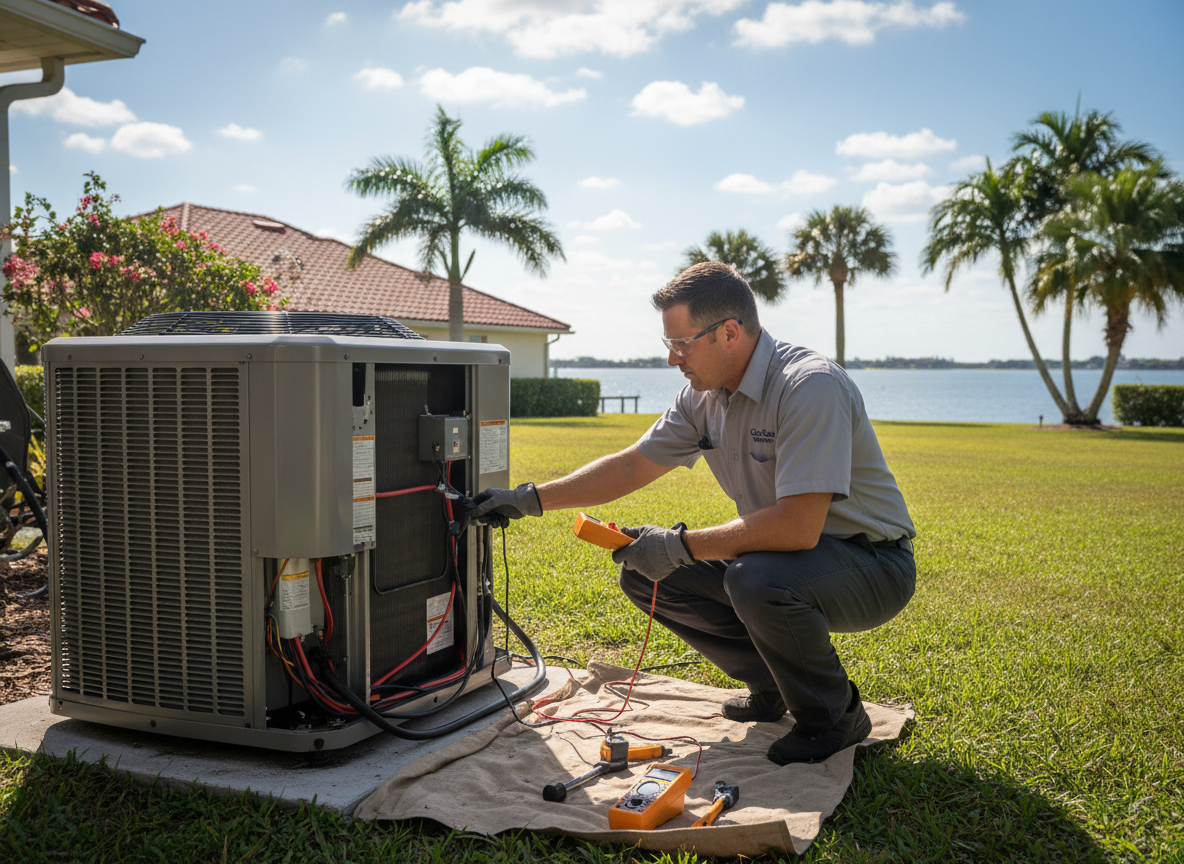
Tampa Bay heat pumps run year-round in high humidity and face constant salt air exposure from the Gulf and bay waters. This accelerates coil corrosion on outdoor units, especially in neighborhoods like Hyde Park, Seminole Heights, and Davis Islands where older 1970s-1990s homes have units mounted close to the ground or near seawalls. Technicians routinely find pitted aluminum fins and failing reversing valves that standard inland repairs overlook. Proper cleaning with non-acidic coil solutions and application of protective coatings extends life in these conditions.
Power surges from afternoon thunderstorms common across Hillsborough and Pinellas counties often damage control boards and capacitors. In South Tampa and Carrollwood, where tree cover and older wiring are prevalent, we see frequent low-voltage issues that mimic compressor failure. Checking run capacitors and contactors under load, plus verifying proper refrigerant charge with superheat and subcooling measurements, prevents misdiagnosis. Florida energy code requires leak detection and proper recovery when handling R-410A, so technicians always perform pressure tests before recharging.
Homeowners in the Tampa Bay area frequently attempt DIY filter changes but miss restricted airflow from pollen and construction dust that builds up faster here than in drier climates. This strains the blower motor and leads to frozen coils during peak summer. A full repair includes checking static pressure, cleaning the condensate drain to prevent backups common in flat terrain, and confirming the thermostat communicates correctly with the reversing valve.
Technician insight
In Tampa Bay area, the thing that catches most people out with heat pump repair is salt air corrosion eating through outdoor coils within five years on units placed near the water in places like Davis Islands or Ballast Point, which homeowners mistake for normal wear until the system stops during a humid July stretch.
Hyde Park Heat Pump Coil Failure
Homeowner in Hyde Park reported weak cooling and ice on the lineset. Inspection showed salt-pitted evaporator coils from bay air exposure. Replaced the coil assembly, cleaned the drain line, and restored proper airflow. System now maintains set temperatures through afternoon storms.
How it works
- 1
Initial System Assessment
Arrive on site and review error codes, listen for unusual noises, and check thermostat operation in the Tampa Bay humidity.
- 2
Diagnostic Testing
Measure electrical values, refrigerant pressures, and inspect coils for salt corrosion typical near the bay.
- 3
Component Repair or Replacement
Replace or repair faulty reversing valves, capacitors, or coils while protecting surrounding landscaping from refrigerant recovery.
- 4
Performance Verification
Run the system through heating and cooling modes, confirm proper defrost cycles, and document final readings.
Pricing
Upfront quote after inspection with no hidden fees.