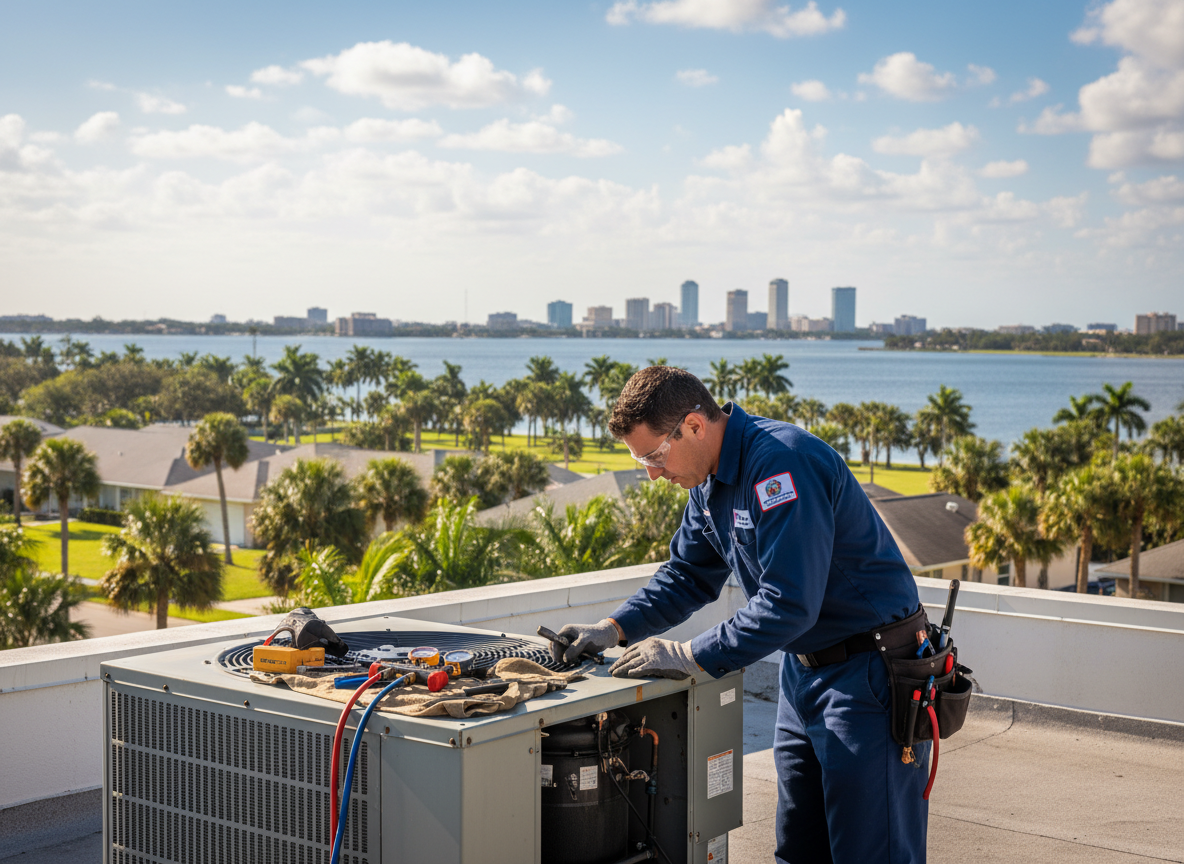
Tampa Bay's humid subtropical climate puts constant strain on air conditioning systems, especially in older brick and frame homes built before widespread central AC adoption. Salt air from the bay accelerates corrosion on outdoor coils and copper lines in neighborhoods near the water. Technicians here routinely see compressors failing earlier than in drier regions because moisture builds up inside the system during long cooling seasons that stretch from March into November. Proper refrigerant handling and coil cleaning become critical to prevent efficiency loss and mold growth inside the ductwork common in these older properties.
When a unit stops cooling, the first step is confirming whether the issue stems from electrical components, low refrigerant, or a failing blower motor rather than assuming a simple recharge will solve it. Many Tampa systems installed in the 1980s and 1990s still use R-22, requiring careful retrofits or replacements that meet current Florida energy codes. Ignoring a small leak can lead to compressor burnout within weeks during peak summer humidity, turning a minor repair into a full system replacement. Local techs also check for proper drainage because standing water in the pan quickly breeds algae that clogs lines in the area's frequent afternoon storms.
Edge cases appear regularly in South Tampa and downtown buildings where tight mechanical rooms limit airflow around the indoor unit. Technicians must verify that condensate drains clear the foundation and that electrical disconnects remain accessible, requirements enforced during any permit-related work. Homeowners sometimes attempt DIY capacitor swaps only to discover mismatched voltage ratings that damage the new part immediately. A thorough inspection always includes checking the thermostat wiring and confirming the system reaches proper temperature differential across the evaporator coil before leaving the job.
Technician insight
In Tampa Bay area, the thing that catches most people out with air conditioning repair is how quickly salt air and constant humidity corrode coils on units serving pre-1990 homes near downtown Tampa and the waterfront, turning what looks like a simple recharge into repeated leaks if the corrosion isn't addressed during the visit.
No Cooling in Downtown Tampa Condo
The system ran but produced no cold air during a humid stretch. Inspection revealed a corroded evaporator coil leaking refrigerant and a clogged drain line from algae growth common in older buildings. We replaced the coil with a corrosion-resistant model, cleared the drain, and restored proper airflow. The unit now maintains the set temperature without short cycling.
How it works
- 1
Initial Assessment
Arrive on site and review the system's age, recent service history, and current symptoms while confirming power and thermostat settings.
- 2
Detailed Diagnosis
Measure temperatures, pressures, and electrical readings to isolate the root cause without guessing at common Tampa issues like coil corrosion.
- 3
Perform Repair
Replace or restore the faulty component using parts suited to local humidity and salt exposure, then verify drainage and airflow.
- 4
System Testing
Run the unit through a full cycle, confirm proper temperature split, and clear any debris from the work area before departure.
Pricing
Upfront quotes provided after on-site inspection; rates reflect parts and labor required for the specific issue.