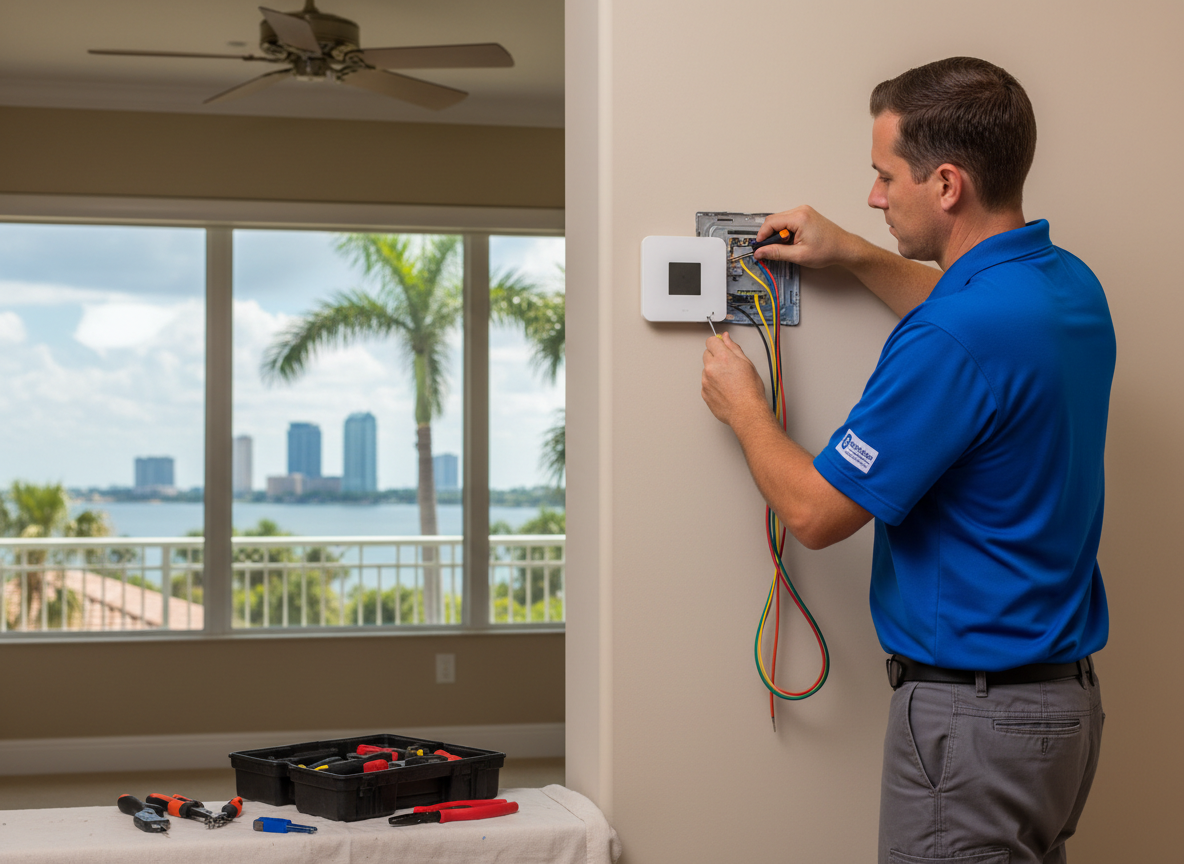
Tampa Bay homes often feature older electrical systems in neighborhoods like Hyde Park and Seminole Heights where knob-and-tube or aluminum wiring still appears. Smart thermostats require stable low-voltage connections that can fail when humidity reaches summer peaks and salt air accelerates corrosion on terminals. Technicians check for C-wire presence first because many 1970s and 1980s split-system units lack one, then add a transformer or adapter when needed to avoid repeated battery changes.
Florida building codes in Hillsborough and Pinellas counties require proper separation of low-voltage controls from line-voltage runs inside the same chase. Installers also verify that the new thermostat communicates reliably with the outdoor condenser through the existing thermostat wire, which can be undersized or damaged after decades of roof leaks common during hurricane season. Edge cases include multi-stage heat pumps that need exact dip-switch settings to prevent short cycling in the high cooling loads typical here.
Homeowners frequently encounter compatibility problems with older Carrier and Trane units still common in South Tampa. The installation includes confirming that the new device supports the exact staging and reversing-valve wiring present, then testing dehumidification modes that local systems rely on during the long rainy season. Final steps cover app setup on the homeowner’s network and verification that the unit reports accurate indoor humidity readings that affect comfort in this climate.
Technician insight
In Tampa Bay area, the thing that catches most people out with Smart thermostat installation is the corroded thermostat wire hidden inside exterior walls of pre-1990 homes near the bay; once you open the old plate you find green crust on the terminals from years of humidity and you have to decide whether to fish new wire or add a power extender kit without tearing up drywall.
Old Wiring in Seminole Heights Bungalow
Homeowner reported the smart thermostat losing power every few days. Inspection showed aluminum wiring and no C-wire behind the plate in a 1978 bungalow. We added a power extender kit at the air handler and confirmed stable 24-volt supply. The unit now maintains schedules and reports accurate humidity without battery alerts.
How it works
- 1
Site Assessment
Inspect existing thermostat wiring, HVAC equipment age, and panel access at the Tampa Bay property.
- 2
Compatibility Check
Verify C-wire presence, staging requirements, and network signal strength for the smart model.
- 3
Wiring and Mounting
Install base plate, connect labeled wires, and secure the device while following local electrical separation rules.
- 4
Configuration and Testing
Program schedules, enable humidity control, pair with the app, and run system cycles to confirm operation.
Pricing
Cost depends on wiring condition, equipment age, and whether adapters or new wire runs are required; 24/7 quotes available.