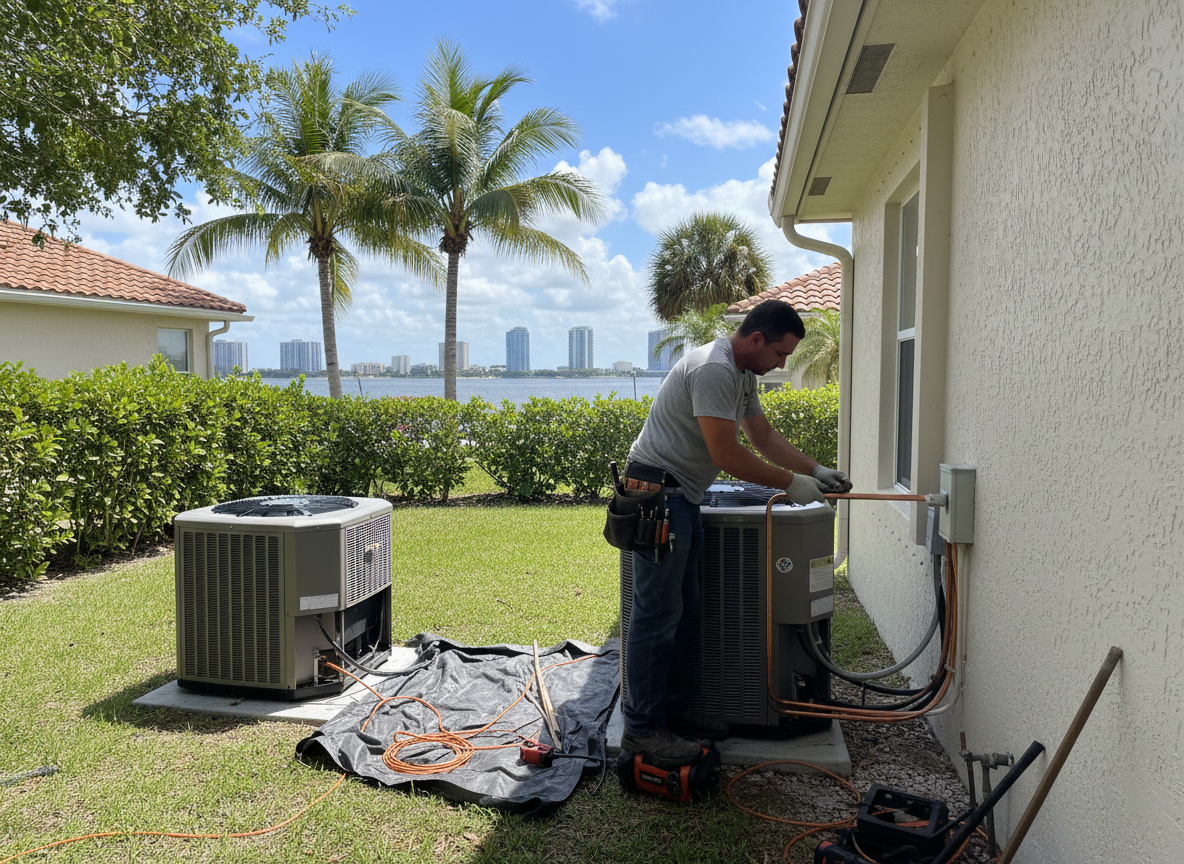
Tampa Bay homes often feature older ductwork and systems installed decades ago in neighborhoods like Hyde Park and Seminole Heights. Constant high humidity and summer heat push units to run longer cycles, accelerating wear on compressors and coils. Replacement requires evaluating existing refrigerant lines and ensuring new equipment meets Florida energy codes for coastal exposure.
Salt air corrosion is a common factor near the bay, degrading outdoor condensers faster than inland units. Technicians must account for proper drainage to prevent moisture issues in crawl spaces common in older Tampa properties. Selecting units with coated coils and higher SEER ratings helps manage the region's year-round cooling demands without excessive energy use.
Proper sizing prevents short cycling in variable weather patterns around the bay. Installations include sealing connections to block humidity infiltration and verifying airflow across multi-story layouts typical in the area. Homeowners in flood-prone zones need elevated platforms for new equipment to maintain compliance and longevity.
Upgrading often reveals mismatched duct sizes from previous retrofits in post-war housing. Careful load calculations ensure the new system handles peak loads without oversizing, which leads to poor dehumidification in this climate.
Technician insight
In Tampa Bay area, the thing that catches most people out with HVAC replacement is underestimating how salt air near the water eats through coils on older units in places like Davis Islands. Homeowners often skip checking drainage slopes in crawl spaces until humidity problems show up after install.
Hyde Park System Failure
A 1970s home showed repeated compressor issues from nonstop summer runs. Inspection found corroded coils and undersized ducts. We replaced the full system with a humidity-focused unit, sealed connections, and adjusted airflow. The home now maintains steady comfort without short cycling.
How it works
- 1
Site Assessment
Technician evaluates current system, ductwork condition, and home layout in the Tampa Bay area.
- 2
System Selection
Recommend equipment sized for local humidity loads and corrosion resistance.
- 3
Removal and Prep
Safely disconnect and remove old unit while protecting existing lines and electrical.
- 4
Installation
Set new equipment, connect lines, test seals, and verify drainage.
- 5
Testing and Handover
Run full system checks and explain maintenance needs for bay area conditions.
Pricing
Costs depend on home size, existing duct conditions, and equipment efficiency needs in Tampa Bay homes.