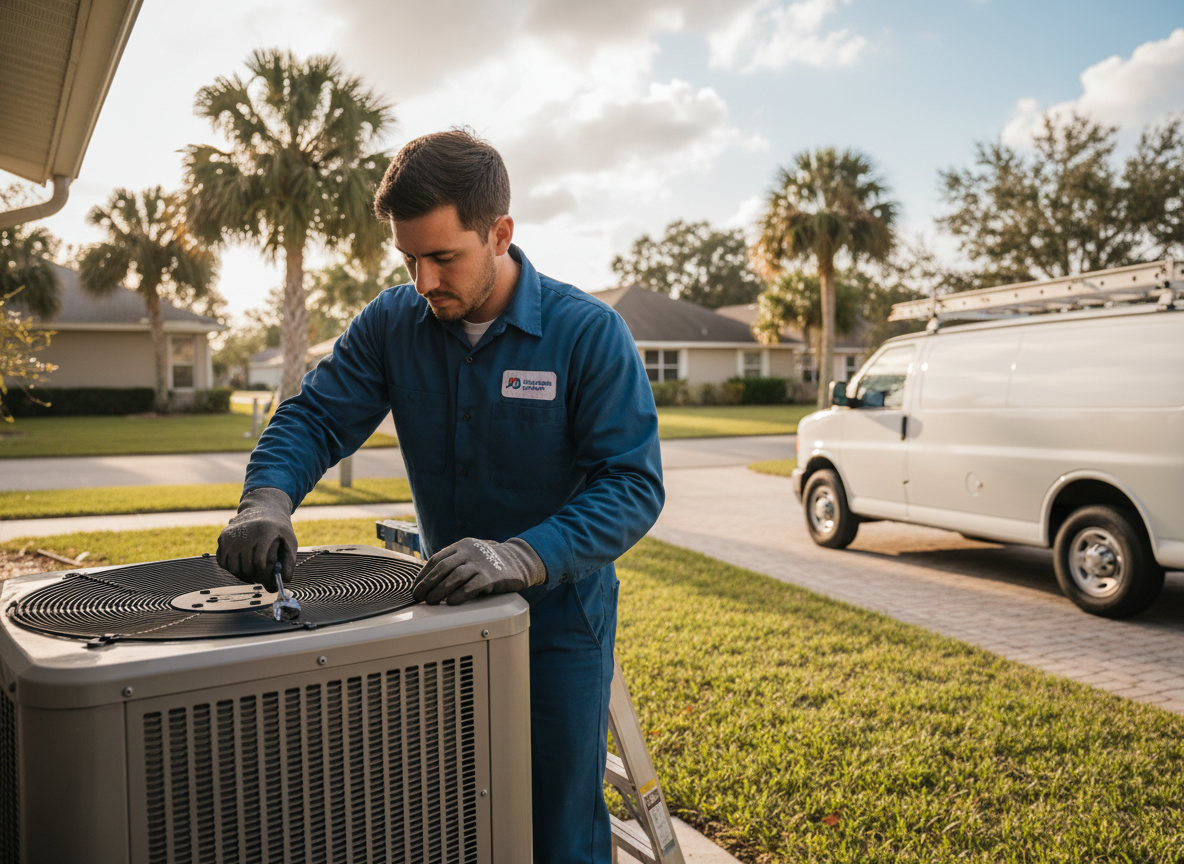
Tampa Bay's year-round humidity and summer heat put constant strain on HVAC systems, especially in homes built before the 1980s in neighborhoods like Hyde Park and Seminole Heights. These older properties often have undersized or poorly sealed ductwork that allows moisture buildup and reduces efficiency. Technicians must check for corrosion on outdoor units caused by salt air drifting in from the bay and address condensate drain clogs that become common during the wet season.
In newer subdivisions around Wesley Chapel or South Tampa, systems installed in the last fifteen years frequently need attention to variable-speed compressors and smart thermostats that fail when power surges hit during afternoon storms. Proper refrigerant line insulation prevents sweating that can damage ceilings in two-story homes common along the bayfront. Local code requires permits for any refrigerant work, and skipping proper evacuation leads to repeated compressor failures within a single season.
Homeowners in Clearwater and St. Petersburg often overlook how pollen and gulf moisture combine to clog evaporator coils faster than inland areas. Regular coil cleaning and drain pan treatments extend equipment life in these conditions. When replacing units, matching the SEER rating to the home's insulation and window exposure avoids short-cycling that drives up electric bills during peak summer months.
Seasonal Maintenance Considerations
Tampa Bay's mild winters still require heating checks because heat pumps switch to auxiliary strips during rare cold snaps. Neglecting these strips leads to cold mornings when temperatures drop into the 30s. Inspecting for proper airflow across the entire system prevents uneven temperatures between upstairs and downstairs in split-level homes found throughout the county.
Technician insight
In Tampa Bay area, the thing that catches most people out with heating and cooling near me is how quickly salt air and constant humidity corrode the outdoor coil fins on units near the water in places like Davis Islands or Pass-a-Grille, turning what should be a simple capacitor swap into a full coil replacement if left unchecked for two seasons.
Heat Pump Short Cycling in South Tampa
A 1970s ranch in South Tampa showed short cycling on the heat pump during a mild cold snap. Inspection found clogged condensate drains and corroded fins from bay proximity. Cleared the drains, replaced the capacitor, and added a drain treatment. The system now runs full cycles and maintains even temperatures without auxiliary heat overuse.
How it works
- 1
Initial Assessment
Technician arrives at the Tampa Bay property and inspects the full system including outdoor unit condition, ductwork access points, and thermostat function while noting home age and exposure.
- 2
Diagnostic Testing
Measure static pressure, temperature differentials, and humidity levels to identify issues specific to coastal corrosion or older duct layouts common in the area.
- 3
Repair or Adjustment
Address the diagnosed problem on site, such as clearing drains, sealing ducts, or replacing components affected by local humidity and salt exposure.
- 4
System Verification
Run the unit through cycles, confirm proper dehumidification, and explain findings to the homeowner before leaving the site.
- 5
Follow-Up Documentation
Provide written notes on observed conditions and recommended next steps based on the home's specific Tampa Bay location and construction.
Pricing
Upfront quotes provided after on-site inspection; pricing varies by home age, system access, and specific Tampa Bay location factors.