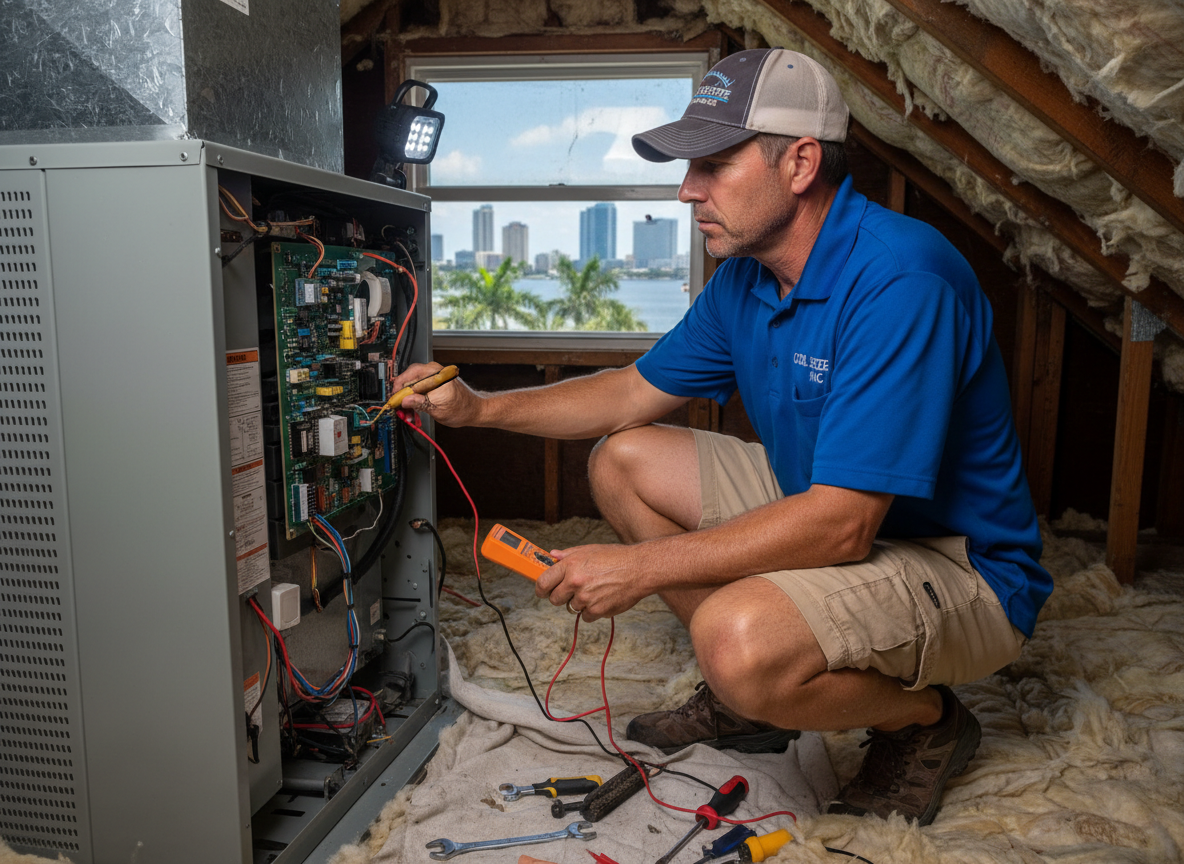
Tampa bay area homes often have central air systems installed decades ago in neighborhoods like Hyde Park and Seminole Heights where original ductwork runs through hot attics. High year-round humidity loads the evaporator coils, leading to ice buildup, drain clogs and reduced airflow that standard filter changes cannot fix. Technicians see repeated failures on units where the condensate line exits near ground level and collects debris from the area's frequent afternoon storms.
Repair calls frequently involve older split systems in South Tampa and Davis Islands where salt-laden air accelerates corrosion on outdoor condensers. When a compressor shorts or a reversing valve sticks, the entire charge must be recovered and the system leak-tested before any refrigerant is added. Local codes require proper documentation of recovered refrigerant and verification that the new components meet current SEER ratings when replacements are made.
Edge cases include homes in Carrollwood and Town 'n' Country where tree cover and poor grading cause standing water around the outdoor unit, shortening contactor life and rusting electrical panels. Technicians carry extra capacitors and contactors sized for the common 3- to 5-ton units found in these neighborhoods because single-day failures spike after heavy rain events.
Before any repair, the system is checked for proper static pressure across the evaporator and supply plenum because many Tampa bay area homes have undersized returns from original construction. Skipping this step often leads to repeat callbacks within weeks.
Technician insight
In Tampa bay area, the thing that catches most people out with central air repair is undersized return air paths in pre-1990 homes combined with the constant humidity load. When a tech only swaps a capacitor without checking static pressure, the new part fails again inside a month because the coil stays wet and the blower motor overheats.
Frozen Coil After Heavy Rain
A homeowner in Seminole Heights reported the central air blowing warm air after a weekend of storms. Inspection showed a clogged primary drain line and low refrigerant from a pinhole leak on the outdoor coil caused by salt exposure. The line was cleared, the leak repaired, and the system recharged to factory specs. Temperature split returned to 18 degrees and the unit has run without issues through the remaining summer.
How it works
- 1
Initial Assessment
Arrive on site and review the homeowner's description of the issue while noting model and age of the existing equipment.
- 2
Diagnostic Testing
Measure refrigerant pressures, temperature differentials and electrical values to isolate the fault without guesswork.
- 3
Component Repair or Replacement
Replace or rebuild the failed part such as a capacitor, contactor, or TXV while protecting surrounding finishes.
- 4
System Verification
Recharge if needed, test all safety controls and confirm airflow and temperature split meet manufacturer specifications.
- 5
Final Walkthrough
Show the homeowner the repaired area and explain any maintenance steps that will reduce future humidity-related problems.
Pricing
Upfront quote given after on-site inspection; no hidden trip charges.