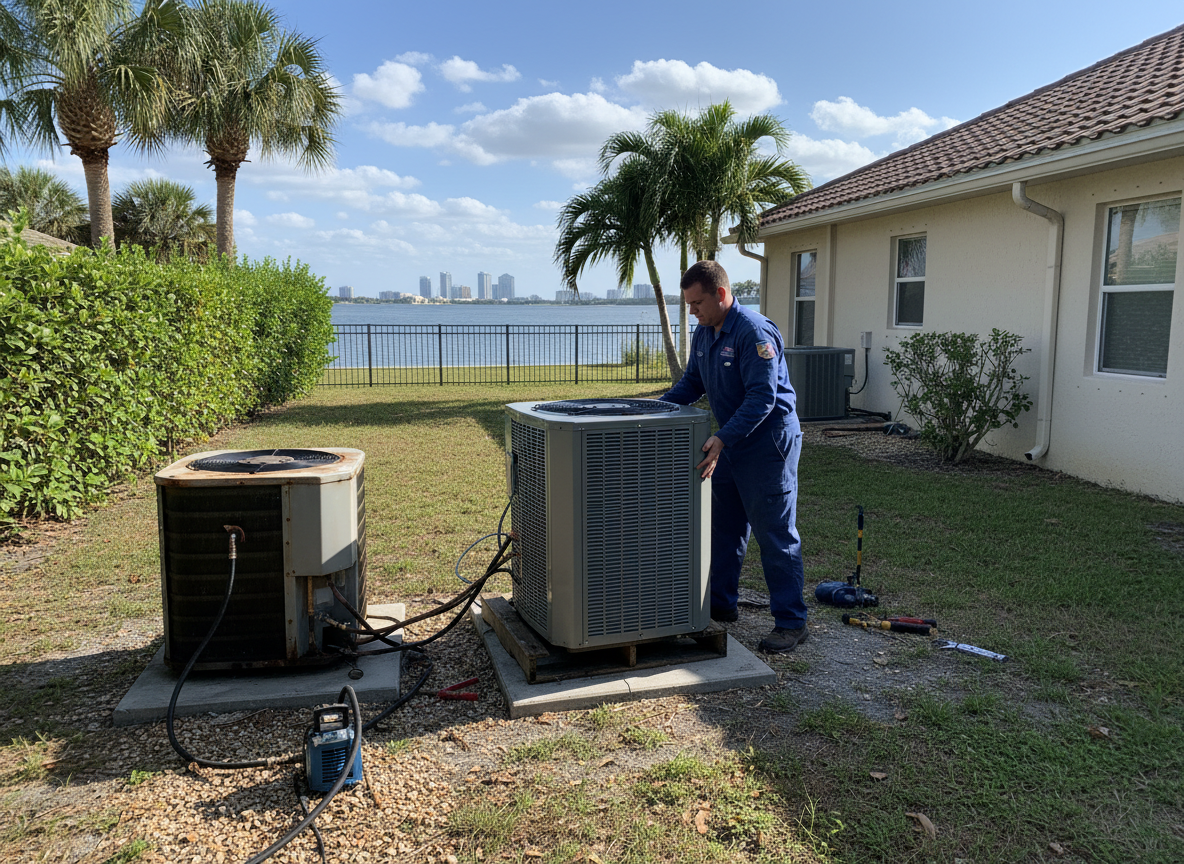
Tampa Bay homes built before 1980 in neighborhoods like Seminole Heights and Ybor City often have undersized or poorly sealed ductwork that struggles with the area's persistent 70-plus percent humidity. Replacing an air conditioner here requires checking static pressure and ensuring the new system can handle moisture removal without short-cycling. Salt air from the bay accelerates coil corrosion on units in South Tampa and Davis Islands, so we specify coated coils and elevated condensate lines to prevent water damage during heavy summer rains.
Florida energy code updates push for higher SEER ratings on replacements, but simply upsizing tonnage creates its own problems in older frame houses common around Hyde Park and Palma Ceia. We measure actual cooling loads room by room rather than matching the old nameplate, because many 1960s and 1970s homes have added insulation or solar screens that change the calculation. Poor drainage from flat lots near the Hillsborough River can flood new equipment pads, so we always verify slope and add secondary pans where needed.
Homeowners sometimes skip proper refrigerant line flushing when swapping to a new R-410A or R-32 unit, leaving mineral oil residue that damages the compressor within the first year. In Pinellas County coastal zones, we also check for wind-load bracing required on outdoor units exposed to hurricane gusts. These steps prevent callbacks that are common when coastal conditions and older electrical panels are overlooked.
Technician insight
In Tampa bay area, the thing that catches most people out with Air conditioner replacement is how flat lots and poor drainage around older homes near the Hillsborough River let condensate back up into the new unit, so we always verify pad slope and add a safety switch before leaving the job.
Seminole Heights Bungalow Replacement
The 1972 home had an aging unit that short-cycled during afternoon storms. Inspection showed corroded coils from nearby bay air and clogged drains from the flat lot. We replaced it with a properly sized system featuring coated coils and an elevated pad with secondary safety switch. Cooling stabilized and humidity dropped without further water issues.
How it works
- 1
Site Assessment
Measure cooling load, inspect ductwork condition, and check electrical service capacity at the Tampa Bay property.
- 2
Old Unit Removal
Safely recover refrigerant, disconnect lines, and remove the existing air conditioner while protecting surrounding landscaping.
- 3
New Equipment Placement
Set the new condenser on a properly sloped pad, run new linesets if needed, and connect to existing or upgraded ductwork.
- 4
Startup And Verification
Charge the system, test airflow and dehumidification performance, then confirm thermostat operation under local load conditions.
Pricing
Pricing varies with unit efficiency, home size, and any needed duct or electrical updates; we provide detailed upfront quotes after assessment.