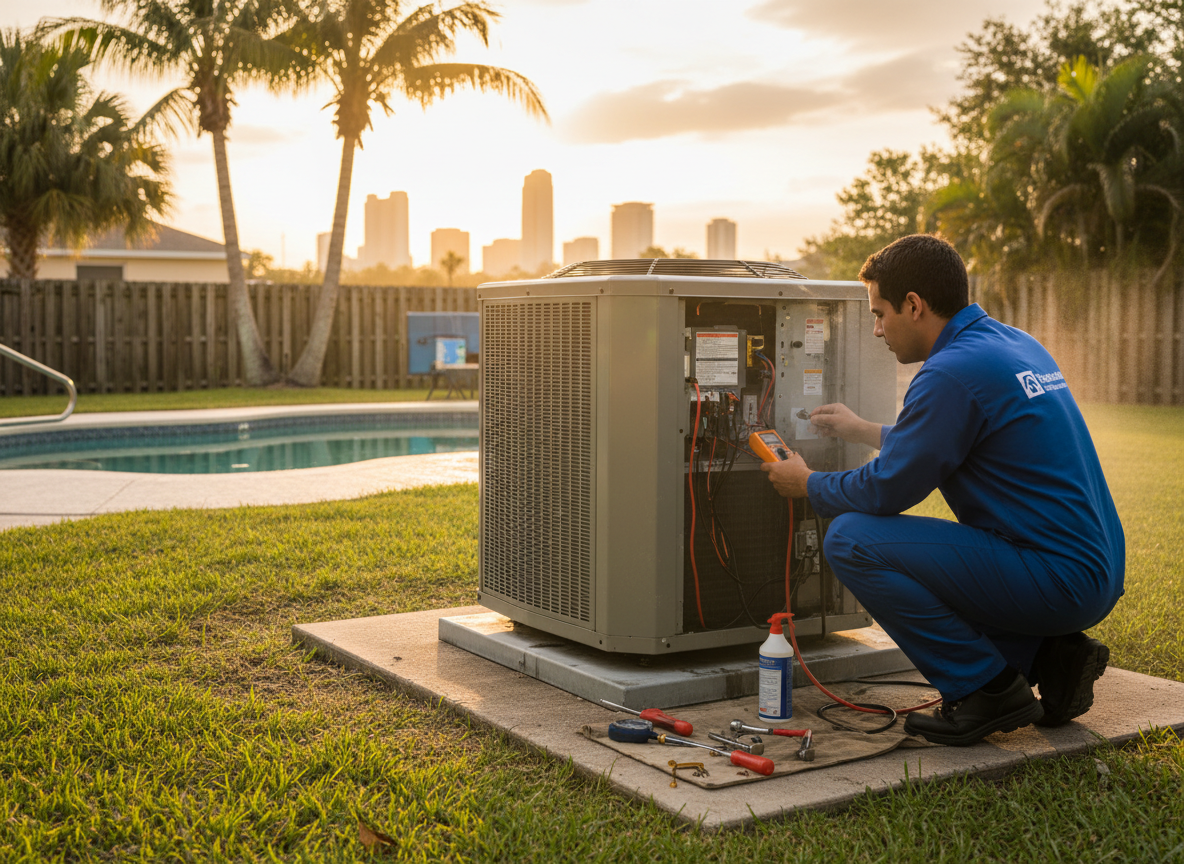
Tampa Bay homes in neighborhoods like Hyde Park, Seminole Heights and Davis Islands often run 15- to 25-year-old package units or split systems that sit in salt-laden air. During an AC tune up we pull the panels, wash the evaporator and condenser coils with a non-acid cleaner rated for coastal corrosion, then treat the condensate pan and line with an algaecide tab because constant 70-plus percent humidity breeds slime that blocks drains within weeks. We also check the capacitor values and contactor wear, items that fail faster here than inland because of daily 90-plus degree operation and afternoon thunderstorms that cycle the unit on and off repeatedly.
Older Tampa housing stock frequently has R-22 systems or early R-410A units with undersized return-air paths. A proper tune up includes measuring static pressure across the coil and blower; if the reading is high we note it so the homeowner knows the ductwork, not the equipment, is the real limit. We also verify the float switch on the primary drain pan trips the system, a code requirement in Hillsborough County that prevents ceiling damage during the long rainy season. Skipping this step is the most common oversight we see on service calls after summer storms.
Every tune up ends with a written checklist that records refrigerant pressures, temperature split and amp draw so future changes are obvious. Because we operate from 1106 N Franklin St and run 24/7, we can return the same evening if a customer reports a new drain smell after we leave. The goal is to keep the system running through the next hurricane season without surprise breakdowns caused by neglected moisture or corrosion.
Technician insight
In Tampa Bay area the thing that catches most people out with ac tune up is how fast algae grows in the drain line once summer humidity hits 80 percent; one missed treatment and you get an overflow into a Seminole Heights ceiling the next week.
AC Tune Up in Davis Islands Condo
Owner reported weak airflow after a week of daily storms. We found a partially blocked primary drain and salt buildup on the condenser fins. Cleaned both, treated the pan and restored full static pressure. System ran through the rest of hurricane season without further calls.
How it works
- 1
System Inspection
We examine coils, electrical components and drain line condition while noting any visible salt corrosion common near the bay.
- 2
Coil Cleaning and Treatment
Evaporator and condenser coils are washed and the condensate pan receives algaecide to fight Tampa Bay humidity buildup.
- 3
Performance Testing
Static pressure, temperature split and electrical readings are recorded to catch issues before they cause a July failure.
- 4
Final Checklist and Report
Homeowner receives a written summary with any noted concerns about ducts or aging components.
Pricing
Upfront quote based on unit size, age and access; no hidden trip fees inside Tampa Bay area.